Knowledge Base

Study smarter,
score higher.

Guides, strategies and deep dives from exam toppers and certified coaches — all in one place.

image

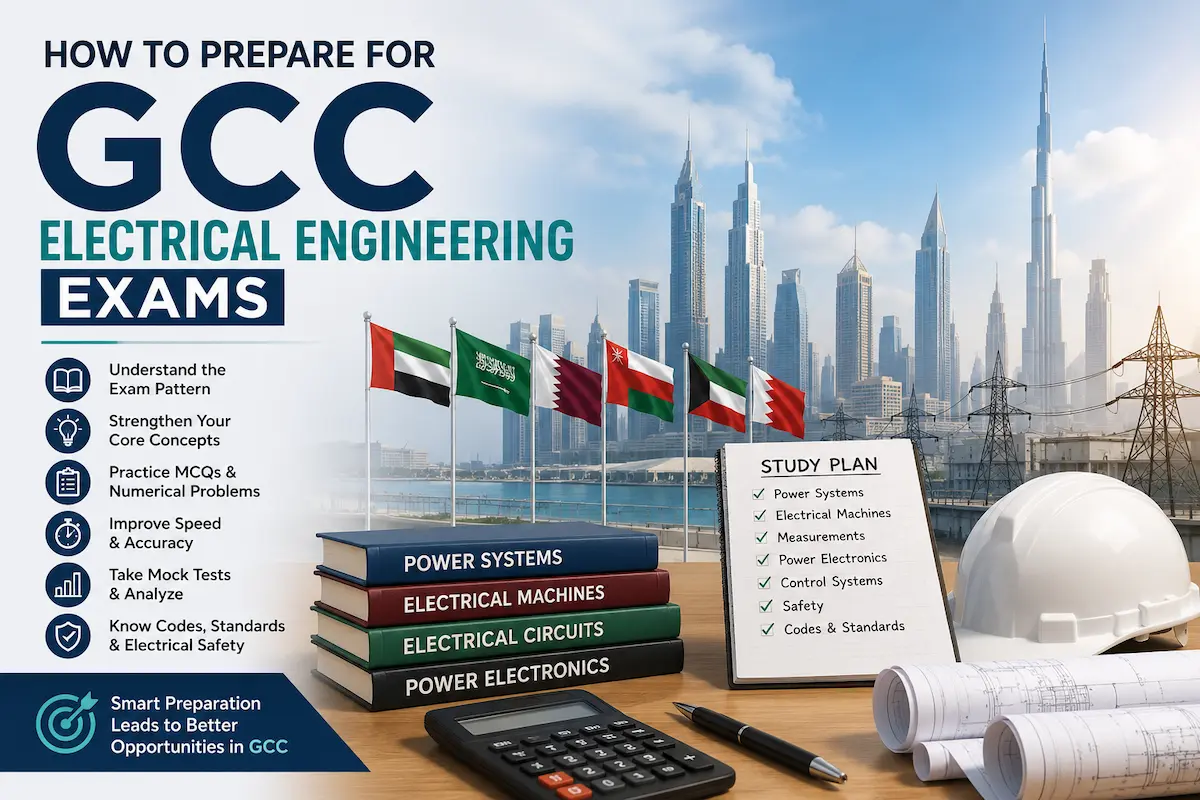
How to Prepare for GCC Electrical Engineering Exams: A Complete Guide

GCC countries such as the UAE, Saudi Arabia, Qatar, Oman, Kuwait, and Bahrain offer excellent career opportunities for Electrical Engineers. However, candidates applying for technical positions may need to clear technical assessments, competency tests, licensing examinations, or employer-specific electrical engineering exams.

Preparing for these exams requires a combination of strong technical knowledge, problem-solving skills, practical understanding, and effective time management.

This guide explains how Electrical Engineers can prepare effectively for GCC electrical engineering exams and technical assessments.

What Are GCC Electrical Engineering Exams?

GCC electrical engineering examinations and technical assessments can vary depending on the country, employer, job position, and regulatory authority.

Depending on the opportunity, candidates may be tested on areas such as:

  • Electrical Engineering fundamentals
  • Power systems
  • Electrical machines
  • Electrical circuits
  • Electrical measurements
  • Protection systems
  • Power electronics
  • Control systems
  • Electrical safety
  • Electrical installations
  • Electrical codes and standards
  • Practical engineering concepts

Some assessments may also include questions related to the candidate's professional experience and specific job responsibilities.

1. Understand the Exam or Assessment Pattern

Before starting your preparation, identify what type of assessment you are going to take.

The syllabus and question pattern can differ between countries, companies, and job roles.

Find out:

  • Exam syllabus
  • Question format
  • Number of questions
  • Exam duration
  • Passing requirements
  • Technical subjects
  • Practical or scenario-based questions
  • Relevant codes and standards

Having a clear understanding of the assessment helps you prepare efficiently instead of studying everything without a strategy.

2. Strengthen Your Electrical Engineering Fundamentals

Strong fundamentals are essential for almost every Electrical Engineering technical assessment.

Start by revising important subjects such as:

Electrical Circuits

Focus on:

  • Ohm's Law
  • Kirchhoff's Laws
  • AC and DC circuits
  • Network theorems
  • Resonance
  • Three-phase circuits
  • Power factor

Electrical Machines

Revise:

  • Transformers
  • DC machines
  • Induction motors
  • Synchronous machines
  • Motor characteristics
  • Starting methods
  • Efficiency and losses

Power Systems

Important areas include:

  • Power generation
  • Transmission and distribution
  • Fault analysis
  • Power factor correction
  • Circuit breakers
  • Relays
  • Protection systems
  • Earthing

Electrical Measurements

Understand:

  • Measuring instruments
  • CT and PT
  • Energy meters
  • Measurement errors
  • Instrument transformers
  • Digital measurement systems

A strong foundation makes it easier to solve both theoretical and numerical questions.

3. Study Electrical Safety

Electrical safety is particularly important for engineers working on construction, industrial, infrastructure, and maintenance projects.

Revise concepts related to:

  • Electrical hazards
  • Earthing
  • Short circuits
  • Overcurrent protection
  • Isolation procedures
  • Lockout/Tagout
  • Personal protective equipment
  • Safe electrical installation
  • Emergency procedures

Do not treat safety-related questions as secondary topics. They can be important in technical assessments and interviews.

4. Understand Electrical Codes and Standards

GCC engineering projects commonly follow international and regional standards depending on the project and authority.

Candidates should understand the purpose and basic application of relevant standards rather than attempting to memorize every clause.

Depending on the role, you may encounter standards and regulations related to:

  • Electrical installations
  • Wiring
  • Protection
  • Earthing
  • Fire and life safety
  • Industrial electrical systems
  • Building services

Always check the specific requirements mentioned in the job description or examination guidelines because applicable standards can vary by country and project.

5. Practice Numerical Problems

Many candidates concentrate heavily on theoretical questions and spend less time solving numerical problems.

This can be a disadvantage in technical examinations.

Practice problems involving:

  • Voltage
  • Current
  • Power
  • Energy
  • Power factor
  • Transformer calculations
  • Motor calculations
  • Three-phase systems
  • Cable sizing
  • Voltage drop
  • Short-circuit calculations

The objective is not simply to remember formulas. You should understand when and how to apply them.

6. Improve Your MCQ Solving Speed

Technical assessments often require candidates to answer many questions within a limited time.

Therefore, speed matters.

While practicing MCQs:

  1. Read the question carefully.
  2. Identify the concept being tested.
  3. Eliminate obviously incorrect options.
  4. Calculate only when necessary.
  5. Avoid spending too much time on one question.
  6. Mark difficult questions and return to them later.

Regular timed practice can significantly improve your confidence and efficiency.

7. Take Regular Mock Tests

Mock tests are one of the most effective ways to prepare for competitive technical examinations.

A good mock test can help you understand:

  • Your current preparation level
  • Weak technical areas
  • Time management problems
  • Frequently occurring mistakes
  • Accuracy level
  • Question-solving speed

After every mock test, don't just look at the final score.

Analyze the questions you answered incorrectly and identify why you made the mistake.

8. Create a Revision Strategy

A structured revision plan can prevent information overload.

Divide your preparation into three stages:

Stage 1 – Concept Building

Understand the fundamental concepts and important formulas.

Stage 2 – Question Practice

Solve topic-wise MCQs and numerical problems.

Stage 3 – Mock Tests and Revision

Take full-length tests and revise your weak areas.

This approach is more effective than repeatedly reading the same study material.

9. Prepare According to Your Job Role

GCC technical assessments can be highly role-specific.

For example, a candidate applying for an Electrical Maintenance Engineer position may need stronger knowledge of:

  • Motors
  • Industrial equipment
  • Protection systems
  • Troubleshooting
  • Preventive maintenance
  • Electrical safety

A candidate applying for an Electrical Design Engineer position may need more focus on:

  • Electrical load calculations
  • Cable sizing
  • Voltage drop
  • Lighting design
  • Distribution systems
  • Electrical drawings
  • Building services

Therefore, align your preparation with the position you are applying for.

10. Follow a Consistent Daily Study Routine

You don't necessarily need to study for many hours every day.

Consistency is more important.

A simple daily routine could include:

1 hour: Concept revision
1 hour: MCQ practice
30 minutes: Numerical problems
30 minutes: Previous mistakes and revision

Adjust the schedule according to your available time and exam date.

Common Mistakes to Avoid

While preparing for GCC Electrical Engineering exams, avoid these common mistakes:

  • Studying without knowing the exam pattern
  • Depending only on theoretical notes
  • Ignoring numerical problems
  • Not practicing timed MCQs
  • Ignoring electrical safety
  • Memorising formulas without understanding them
  • Taking too few mock tests
  • Not analysing mistakes
  • Preparing without considering the job role

Final Preparation Strategy

A successful preparation strategy should combine concepts + practice + revision + mock tests.

Start with the fundamentals, identify the topics relevant to your target position, practice technical MCQs regularly, and use mock tests to measure your progress.

If you are preparing for a GCC Electrical Engineering opportunity, start your preparation early and focus on improving both technical knowledge and exam performance.

Practice Electrical Engineering Mock Tests

Regular practice is one of the best ways to improve speed, accuracy, and confidence before a technical assessment.

Use Electric Sine to practice Electrical Engineering questions and test your preparation with online mock tests.

Prepare better. Practice regularly. Perform with confidence.
image

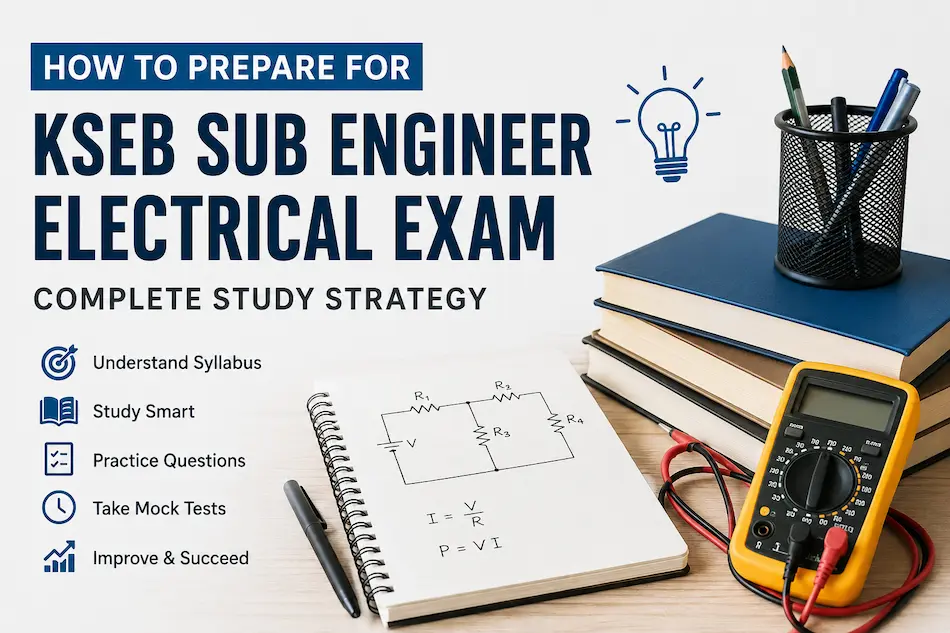
How to Prepare for KSEB Sub Engineer Electrical Exam: Complete Study Strategy

Whether you are starting your preparation or looking for a better way to revise, this guide will help you build an effective preparation strategy.

Why Proper Preparation Is Important

The KSEB Sub Engineer Electrical exam covers several areas of electrical engineering. Candidates need to understand concepts clearly and answer questions accurately within a limited time.

Many students spend a lot of time studying but do not get the expected results because they focus only on reading. Practice and revision are equally important.

A good preparation strategy should include:

  • Understanding the syllabus
  • Studying important electrical engineering topics
  • Solving previous questions
  • Regular revision
  • Taking mock tests
  • Improving speed and accuracy

1. Understand the Exam Syllabus

Before starting your preparation, understand the syllabus properly.

Make a list of the major topics and divide them into smaller sections. This will help you track your progress and avoid spending too much time on one subject.

Important areas may include:

  • Electrical Circuits
  • Electrical Machines
  • Power Systems
  • Measurements and Instrumentation
  • Power Electronics
  • Control Systems
  • Basic Electronics
  • Electrical Installation and Safety
  • Generation, Transmission and Distribution
  • Electrical Materials

Always refer to the latest official notification and syllabus before making your final study plan.

2. Build Strong Electrical Engineering Fundamentals

Competitive exams often test your understanding of basic concepts.

Instead of simply memorizing formulas, try to understand why and where a formula is used.

For example, when studying electrical circuits, make sure you understand:

  • Ohm's Law
  • Kirchhoff's Laws
  • Series and parallel circuits
  • Network theorems
  • AC and DC circuits
  • Power and energy calculations

A strong foundation makes it easier to solve application-based questions.

3. Give More Attention to Important Topics

You do not have to spend the same amount of time on every topic.

Identify frequently asked and high-value topics and give them more attention.

Create three categories:

High Priority: Topics you frequently see in previous questions.

Medium Priority: Topics that are important but have fewer questions.

Low Priority: Topics that are less frequently tested.

This approach helps you use your preparation time efficiently.

4. Practice Previous Questions

Previous questions are one of the best ways to understand the pattern of competitive examinations.

While solving previous questions, don't just check whether your answer is correct.

Ask yourself:

  • Why is this answer correct?
  • Which concept is being tested?
  • Can the same concept be asked in another way?
  • Did I take too much time to solve it?

Maintain a separate notebook for difficult questions and concepts that you repeatedly get wrong.

5. Make Mock Tests Part of Your Preparation

Mock tests are not only for checking your preparation after completing the syllabus.

They should be part of your regular study routine.

A mock test can help you understand:

  • Your current preparation level
  • Speed and accuracy
  • Weak areas
  • Frequently made mistakes
  • Time management
  • Exam pressure

After every mock test, spend some time analysing your mistakes.

Simply taking a test and checking the score is not enough. Test analysis is where much of the improvement happens.

6. Follow a Simple Daily Study Plan

A consistent study routine is more effective than studying for long hours occasionally.

For example, you can divide your daily preparation into four sessions:

Session 1 – Concept Study

Learn a new topic and understand the fundamentals.

Session 2 – Problem Solving

Solve numerical and conceptual questions related to the topic.

Session 3 – Revision

Revise formulas, important concepts and previously studied topics.

Session 4 – Practice Test

Solve a short set of questions or take a mock test.

You can adjust the duration of each session according to your available time.

7. Maintain a Formula and Mistake Notebook

Electrical engineering involves many formulas, relationships and technical concepts.

Maintain a small notebook containing:

  • Important formulas
  • Short tricks
  • Frequently asked concepts
  • Difficult questions
  • Your common mistakes

Revise this notebook regularly, especially during the final stage of preparation.

8. Improve Speed and Accuracy

Knowing the answer is not enough in a competitive examination. You also need to reach the answer quickly and accurately.

During mock tests, monitor:

Time Taken + Correct Answers + Wrong Answers

If you are taking too much time on a particular topic, practice more questions from that area.

At the same time, avoid guessing answers without proper understanding, especially when negative marking is applicable.

9. Avoid These Common Preparation Mistakes

Many candidates make the same mistakes during competitive exam preparation.

Studying Without a Plan

Jumping randomly between different topics can make preparation confusing.

Only Reading Theory

Reading textbooks without solving questions does not provide enough exam practice.

Ignoring Weak Topics

Students often study only their favourite subjects. Spend additional time on topics where your performance is weak.

Taking Mock Tests Without Analysis

A mock test score tells you your current performance. The mistakes tell you how to improve it.

Leaving Revision Until the End

Regular revision helps you retain concepts for a longer period.

10. Use Mock Tests to Track Your Progress

Your mock test scores can be used as a simple progress indicator.

For example:

Week 1: 48%
Week 2: 56%
Week 3: 64%
Week 4: 72%

The goal should not be to get a perfect score immediately.

Instead, focus on continuous improvement in accuracy, speed and conceptual understanding.

How Electric Sine Can Help

Preparing for a competitive electrical examination becomes easier when you have access to regular practice.

Electric Sine provides practice and mock-test resources designed for students preparing for electrical engineering competitive examinations.

Instead of waiting until the final days before the exam, use mock tests regularly throughout your preparation.

You can use your test results to identify weak topics, revise them, and test yourself again.

Final Preparation Strategy

A simple formula for effective preparation is:

Learn → Practice → Test → Analyse → Revise → Repeat

Do not depend on last-minute preparation.

Start with the fundamentals, gradually increase your question-solving practice, take regular mock tests, and analyse every mistake.

With consistent preparation and the right strategy, you can improve both your confidence and performance in the KSEB Sub Engineer Electrical Exam.

Frequently Asked Questions

1. How should I start preparing for the KSEB Sub Engineer Electrical Exam?

Start by understanding the latest syllabus and exam pattern. Then divide the syllabus into topics and create a realistic daily study schedule.

2. Are mock tests important for KSEB Sub Engineer preparation?

Yes. Mock tests help improve speed, accuracy, time management and exam confidence. They also help identify weak areas.

3. Should I solve previous questions?

Yes. Previous questions can help you understand the type and difficulty of questions commonly asked in competitive examinations.

4. How often should I take mock tests?

You can start with one or two tests per week and gradually increase the frequency as the exam approaches.

5. Is revision important for electrical engineering exams?

Absolutely. Regular revision helps retain formulas, concepts and important technical information.

Start Your Preparation Today

Don't wait until the exam date is near to start testing your preparation.

Study consistently. Practice regularly. Take mock tests. Analyse your mistakes. Improve every day.

Prepare smarter with Electric Sine and take one step closer to your exam goal.

image

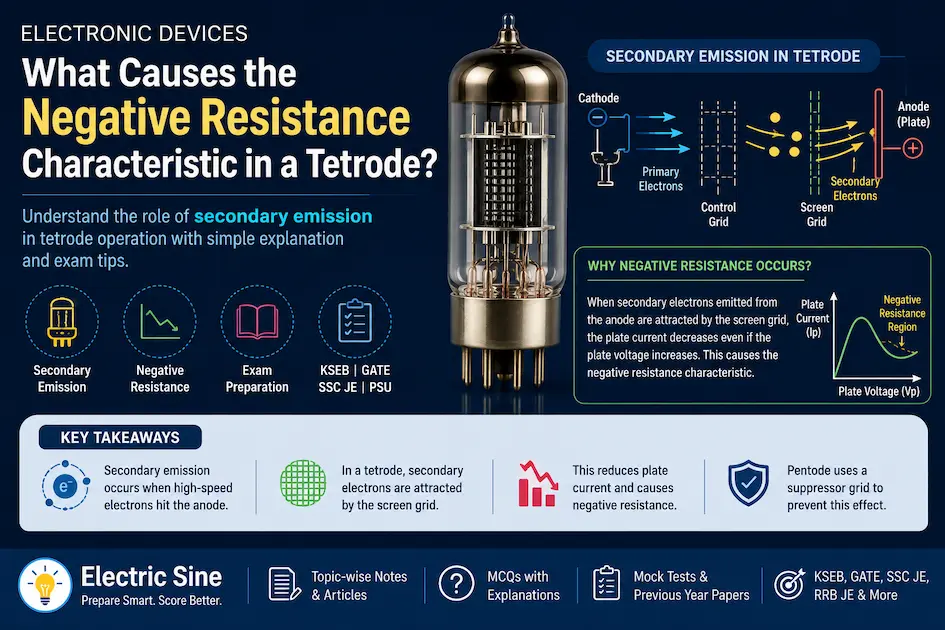
What Causes the Negative Resistance Characteristic in a Tetrode?

Let's understand one important MCQ in detail.

MCQ

What causes the negative resistance characteristic in a tetrode?

A. Grid biasing
B. Anode voltage
C. Secondary emissions āœ…
D. Cathode temperature

Correct Answer: C. Secondary emissions


What is a Tetrode?

A tetrode is a vacuum tube that consists of four electrodes:

  • Cathode
  • Control Grid
  • Screen Grid
  • Plate (Anode)

The screen grid is placed between the control grid and the anode to reduce the unwanted capacitance between them and improve amplification at higher frequencies.


Why Does a Tetrode Show Negative Resistance?

The negative resistance characteristic occurs because of a phenomenon known as secondary emission.

When electrons emitted from the cathode travel at high speed and strike the anode, they can dislodge additional electrons from the anode surface. These newly released electrons are called secondary electrons.

Under certain operating conditions, the screen grid has a higher positive potential than the anode. As a result, many of these secondary electrons are attracted toward the screen grid instead of returning to the anode.

This reduces the plate current even though the plate voltage is increasing.

Normally,

  • Increase in plate voltage → Increase in plate current

But in a tetrode affected by secondary emission,

  • Increase in plate voltage → Decrease in plate current

This unusual behavior is known as the negative resistance characteristic.


Why is Secondary Emission a Problem?

Secondary emission creates several undesirable effects:

  • Reduction in plate current
  • Distortion in amplifier performance
  • Unstable operation
  • Reduced efficiency
  • Negative resistance region in the characteristic curve

Because of these issues, engineers developed the pentode, which includes an additional suppressor grid to prevent secondary electrons from reaching the screen grid.


How Does a Pentode Solve This Problem?

A pentode contains five electrodes instead of four.

The extra electrode, called the suppressor grid, repels secondary electrons back toward the plate. This eliminates the negative resistance region and improves amplifier performance.

This is one of the most important differences between a tetrode and a pentode.


Quick Exam Notes

āœ” A tetrode has four electrodes.

āœ” The negative resistance characteristic is caused by secondary emission.

āœ” Secondary electrons are attracted to the screen grid.

āœ” A pentode uses a suppressor grid to eliminate secondary emission effects.


Memory Trick

Remember:

Tetrode → Secondary Emission → Negative Resistance

or simply

T → S → N

This shortcut is useful for last-minute revision before competitive exams.


Practice MCQs

1. What causes the negative resistance characteristic in a tetrode?

A. Grid biasing

B. Anode voltage

āœ… C. Secondary emissions

D. Cathode temperature


2. Which electrode attracts secondary electrons in a tetrode?

A. Cathode

A. Control Grid

āœ… C. Screen Grid

D. Suppressor Grid


3. Which vacuum tube eliminates the effect of secondary emission?

A. Diode

B. Triode

C. Tetrode

āœ… D. Pentode


4. How many electrodes are present in a tetrode?

A. Two

B. Three

āœ… C. Four

D. Five


Frequently Asked Question (FAQ)

What is secondary emission?

Secondary emission is the release of electrons from the anode surface when high-speed electrons strike it.

Why does a tetrode exhibit negative resistance?

Because secondary electrons are attracted to the screen grid instead of returning to the plate, causing the plate current to decrease as plate voltage increases.

Which device eliminates secondary emission?

A pentode uses a suppressor grid to prevent secondary electrons from reaching the screen grid.


Conclusion

The negative resistance characteristic in a tetrode is caused by secondary emission. This occurs when electrons emitted from the anode are attracted to the positively charged screen grid, resulting in a reduction in plate current even as plate voltage increases. Understanding this concept is important for students preparing for KSEB, GATE Electrical, SSC JE, RRB JE, PSU, and other electrical engineering competitive examinations.

At Electric Sine, we simplify complex electrical engineering concepts into easy-to-understand explanations with exam-oriented MCQs, helping aspirants improve both conceptual understanding and exam performance.


image

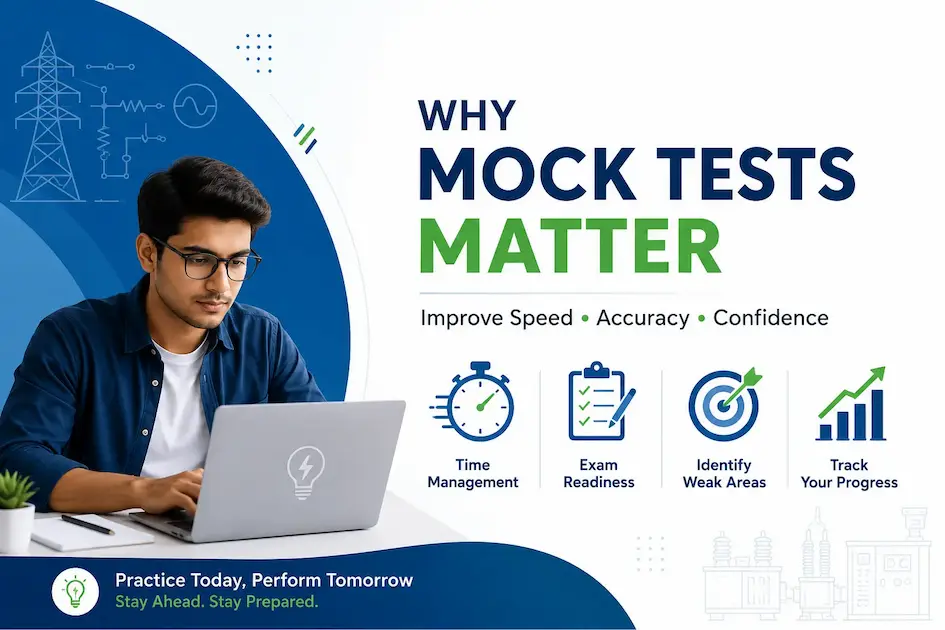
Why Mock Tests Are Essential for Electrical Engineering Competitive Exams

Electrical Engineering competitive exams such as GATE, KSEB, SSC JE, RRB JE, PSU Recruitment, and GCC Technical Exams require more than just completing the syllabus. Success depends on your ability to manage time, understand question patterns, and perform under exam pressure. This is where mock tests become one of the most powerful preparation tools.

  1. Understand the Real Exam Pattern

Mock tests simulate the actual examination environment. They help you become familiar with:

• Question format
• Difficulty level
• Time constraints
• Marking scheme

The more tests you attempt, the more confident you become on the actual exam day.

  1. Improve Time Management

Many candidates know the answers but fail to complete the paper within the allotted time. Regular mock tests help you:

• Allocate time wisely
• Skip difficult questions strategically
• Improve solving speed
• Finish the paper comfortably

  1. Identify Your Weak Areas

Mock test analysis helps you discover:

• Topics where you lose marks
• Frequently repeated mistakes
• Concepts requiring revision

Instead of studying everything repeatedly, you can focus on the areas that need improvement.

  1. Build Exam Confidence

Confidence comes from practice. Every completed mock test reduces exam fear and increases familiarity with pressure situations. By exam day, the real test feels like just another practice session.

  1. Learn from Mistakes

The purpose of a mock test is not to score 100%. Its real value lies in understanding:

• Why you answered incorrectly
• Which concepts need revision
• How to avoid repeating the same mistakes

Each mistake is an opportunity to improve.

  1. Track Your Progress

Weekly mock tests allow you to monitor:

• Score improvement
• Accuracy percentage
• Time taken
• Strong and weak subjects

Consistent progress is a strong indicator that your preparation is on the right path.

  1. Experience Real Exam Pressure

Practicing under timed conditions trains your mind to stay calm and focused. This helps reduce:

• Anxiety
• Panic
• Last-minute confusion

Best Strategy for Mock Tests

To get maximum benefit from mock tests:

  1. Complete the syllabus topic by topic.
  2. Take one mock test every week initially.
  3. Increase the frequency as the exam approaches.
  4. Review every incorrect answer carefully.
  5. Maintain an error notebook for revision.

Why Choose Electric Sine?

At Electric Sine, our mock tests are designed specifically for Electrical Engineering aspirants. We provide:

• Exam-oriented questions
• Detailed solutions
• Performance analysis
• Topic-wise practice tests
• Full-length mock exams
• Regular updates based on the latest exam patterns

Whether you are preparing for GATE, KSEB, SSC JE, RRB JE, PSU Recruitment, or GCC Technical Exams, our platform helps you prepare with confidence.

Final Thoughts

Success in competitive examinations is not determined only by how much you study but also by how effectively you practice. Mock tests bridge the gap between knowledge and performance.

Start taking regular mock tests today, analyze your mistakes, and steadily improve your score with every attempt.

image

Top Public Sector Jobs for Electronics B.Tech and Diploma Holders in India

Our online electronics engineering training platform is carefully designed to help students, diploma holders, and engineering graduates achieve their career aspirations in the government and private sectors. By combining expert instruction with an interactive learning environment, we make technical education more engaging and effective. Our simulation-based learning platform creates a real-world, game-like atmosphere where learners can understand complex engineering concepts through practical scenarios, improving both knowledge retention and problem-solving skills. This hands-on approach helps students build the confidence required for competitive examinations, technical interviews, and professional careers.

The platform offers comprehensive coverage of the core subjects required for Electronics and Communication Engineering (ECE) and related disciplines. The curriculum includes Electronics, Electronics and Communication, Telecommunication, Instrumentation, Programmable Logic Controllers (PLC), Analog Electronics, Digital Electronics, and Solid State Devices. Each module features easy-to-understand explanations, interactive simulations, practice exercises, and assessments to strengthen conceptual understanding and technical skills. Whether you are preparing for government recruitment exams, campus placements, or upgrading your engineering knowledge, our platform provides a flexible and effective learning experience to help you achieve your goals.

image

Electronics Engineering in India: Abundant Government Job Opportunities in the Public Sector

Securing a career in the Central Government, Public Sector Undertakings (PSUs), Defence organizations, Railways, and other government departments requires more than just an engineering degree. Most recruitment processes include competitive examinations, technical tests, and personal interviews, where candidates are expected to demonstrate strong conceptual knowledge and practical problem-solving skills. Our online learning platform is designed to help aspiring electronics engineers prepare effectively with structured courses, expert-led video lectures, practice questions, mock tests, and interview guidance. Whether you are preparing for technical recruitment or aiming to strengthen your core engineering knowledge, our platform provides the right learning path to achieve your career goals.

Our comprehensive curriculum covers all the essential subjects required for competitive examinations and technical interviews, including Electronics Engineering, Electronics and Communication Engineering (ECE), Telecommunication, Instrumentation, Programmable Logic Controllers (PLC), Analog Electronics, Digital Electronics, and Solid State Devices. Each topic is explained in a simple, practical, and exam-oriented manner by experienced faculty members. With flexible online access, regular assessments, and industry-relevant content, you can prepare confidently from anywhere and improve your chances of securing a prestigious government engineering position. Join our online platform today and take the first step toward a successful career in the electronics engineering sector.

image

Global Career Opportunities in the Power Generation and Energy Industry for Electrical Engineers

Looking to build a successful career in the power generation and energy sector? Electricsine is an industry-focused online learning platform designed to help Electrical Engineers and Electrical Polytechnic Diploma holders gain practical, plant-based knowledge and prepare for technical interviews. Our training is based on real industrial applications, helping candidates develop the technical skills and confidence required to secure jobs in power plants, substations, transmission, distribution, and other electrical engineering industries.

Our comprehensive course covers the most important subjects required for power plant jobs and electrical engineering careers, including Power Generation, Power Transmission, Electrical Distribution Systems, Transformers, Electrical Machines, Substation Equipment, Switchgear, Circuit Breakers, Protective Devices, Protective Relays, Industrial Electrical Systems, and Electrical Safety. These topics are essential for technical interviews and recruitment conducted by power utilities, EPC companies, manufacturing industries, and energy sector employers worldwide.

With interactive learning modules, practical case studies, mock technical interviews, and industry-oriented assessments, Electricsine helps you strengthen your technical knowledge, improve problem-solving abilities, and confidently face interviews. Whether you are preparing for Electrical Engineer jobs, Power Plant Engineer jobs, Substation Engineer roles, Technician, or Junior Engineer opportunities in India or abroad, our platform equips you with the skills needed to build a successful career in the global power and energy industry.

image

Career Opportunities for Electrical Polytechnic Diploma Holders in India's Private Sector

Looking for the best job opportunities for Electrical Engineering and Electrical Polytechnic Diploma holders in India? Electricsine offers an industry-focused online training platform designed to help candidates prepare for Electrical Engineer jobs, Electrical Technician jobs, Junior Engineer (JE) recruitment, Electrical Supervisor jobs, and Maintenance Engineer careers in the private sector. Our practical learning approach prepares you for recruitment in leading companies across the power, manufacturing, petrochemical, steel, cement, plastics, automation, and electrical industries.

The course covers all major technical subjects required for electrical engineering jobs, including Power Transmission, Electrical Distribution Systems, Transformers, Electrical Machines, Switchgear, Substation Equipment, Protective Relays, Power Electronics, Industrial Electrical Systems, Motor Control, Electrical Circuits, Basic Electricity, Ohm's Law, and Network Theorems. These topics are commonly asked in written examinations and technical interviews conducted by top private companies.

Electricsine also provides electrical aptitude tests, mock exams, technical interview questions, online practice tests, and industry-oriented training to improve your technical knowledge and problem-solving skills. Whether you are searching for Electrical Engineering jobs in India, Electrical Diploma jobs, private sector Electrical Engineer vacancies, or Technician and Supervisor job opportunities, our platform helps you prepare confidently and increase your chances of securing a rewarding career in the electrical engineering industry.

image

Are You an Electrical Polytechnic Diploma Holder? Explore Job Opportunities in India and Abroad

Are you preparing for Electrical Engineering jobs or looking for the best job opportunities for Electrical Polytechnic Diploma holders? Electricsine is an industry-focused online learning platform designed to help candidates succeed in government jobs, PSU recruitment, and private sector electrical engineering jobs. Our interactive training, topic-wise practice, mock tests, and real exam simulations help you build strong technical knowledge, improve problem-solving skills, and increase your chances of success in competitive examinations and technical interviews.

Our comprehensive course covers all the essential subjects required for Electrical Diploma jobs and Electrical Engineer recruitment, including Basic Electricity, Ohm's Law, Electrical Circuits, Network Theorems, Electrical Machines, Transformers, Power Systems, Electrical Measurements, Switchgear, Protective Relays, Power Electronics, Industrial Electrical Applications, and Speed Control of Electrical Machines. These topics are frequently asked in written tests and interviews conducted by leading government organizations, PSUs, and private companies.

With dedicated Practice Mode and Test Mode, Electricsine enables you to track your performance, identify weak areas, and prepare effectively for Technician, Supervisor, Overseer, Junior Engineer (JE), Maintenance Engineer, and Electrical Engineer jobs in India and abroad. Whether you are searching for Electrical Engineering job opportunities, Electrical Diploma jobs in India, or private sector electrical careers, our platform provides the skills, confidence, and exam preparation needed to secure a successful career in the electrical engineering industry.

image

Are you an electrical engineer, Electricity boards in all states across India is a good option to have career?

Preparing for competitive examinations for State Electricity Boards requires a strong understanding of core electrical engineering concepts and consistent practice. Our platform is one of the best choices for aspiring engineers, offering comprehensive study materials, topic-wise practice sessions, mock tests, and previous years' questions designed to match the latest exam patterns. Whether you are preparing for Assistant Engineer (AE), Junior Engineer (JE), or other technical positions, our courses are structured to help you build confidence and achieve a high score.

Our curriculum covers all the essential subjects, including Power Transmission, Electrical Distribution Systems, Transformers, Electrical Machines, Power Systems, Switchgear and Protection, Protective Relays, Substation Components, Basic Electrical Engineering, and Electrical Measurements. To make learning more engaging, our Practice Mode and Test Mode provide a game-based simulation environment where you can solve questions under real exam conditions, track your performance, analyze your strengths and weaknesses, and improve your speed and accuracy. This interactive approach helps you master technical concepts while developing the confidence needed to succeed in Electricity Board recruitment examinations across India.

image

Electrical Engineering Jobs Abroad – Prepare for Technical Interviews and Global Career Opportunities

Looking for Electrical Engineering jobs abroad? Electricsine is a comprehensive online learning platform designed to help electrical engineers prepare for technical interviews and secure rewarding careers with leading international employers. Our interview-focused training combines fundamental electrical engineering concepts with real-world industrial applications, enabling you to answer technical interview questions confidently and improve your chances of getting hired for Electrical Engineer jobs in Gulf countries, the Middle East, Europe, and other international markets.

Our industry-oriented curriculum covers all major topics required for Electrical Engineer interview preparation, including Power Generation, Power Transmission, Electrical Distribution Systems, Transformers, Substations, Switchgear, Circuit Breakers, Protective Relays, Electrical Machines, Power System Protection, Electrical Safety, Earthing Systems, Motors, and Industrial Electrical Maintenance. These subjects are commonly covered in technical interviews conducted by EPC companies, power utilities, oil & gas industries, manufacturing plants, and infrastructure organizations worldwide.

With interactive learning modules, practical case studies, mock technical interviews, and real-world troubleshooting scenarios, Electricsine helps you strengthen your technical knowledge, improve communication skills, and build interview confidence. Whether you are preparing for Electrical Engineering jobs abroad, Gulf Electrical Engineer jobs, Senior Electrical Engineer interviews, or Electrical Maintenance Engineer careers, our platform equips you with the skills needed to succeed in international technical interviews and build a successful global career.

image

Government Jobs for Electrical Engineers – Prepare for Central & State Government Recruitment

Looking for the best Government Jobs for Electrical Engineers? Electricsine is a comprehensive online learning platform designed to help aspiring electrical engineers succeed in Central Government jobs, State Government jobs, PSU recruitment, and public sector competitive examinations. Our expert-designed courses include video lectures, topic-wise study materials, practice questions, mock tests, previous years' solved papers, and exam-oriented quizzes to help you master technical concepts, improve problem-solving skills, and achieve top ranks in competitive examinations.

Our comprehensive syllabus covers all the core subjects required for Electrical Engineering competitive exams, including Basic Electrical Engineering, Electrical Circuits, Network Theory, Electrical Machines, Transformers, Power Systems, Control Systems, Power Electronics, Electrical Measurements, Digital Electronics, Electromagnetic Fields, Signals and Systems, Power System Protection, and Switchgear. These subjects are essential for success in recruitment examinations conducted by ISRO, DRDO, BARC, Indian Railways, State Electricity Boards, NTPC, NHPC, PGCIL, GAIL, ONGC, NPCIL, and other Central and State Government organizations.

Whether you are preparing for Junior Engineer (JE), Assistant Engineer (AE), Scientist, Technical Officer, Graduate Engineer Trainee (GET), or PSU Electrical Engineer recruitment, Electricsine provides the knowledge, guidance, and continuous practice needed to succeed. With interactive learning, real exam simulations, technical aptitude tests, and detailed performance analysis, our platform helps you secure your dream government job in electrical engineering and build a successful career in India's leading government organizations.